Introduction: Moshkel Gosha
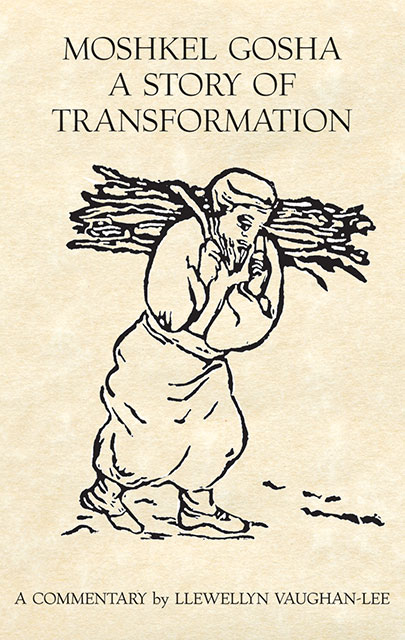
The story of Moshkel Gosha is an ancient Persian story. Told in many different versions, it was as well- known in Persia as Cinderella is in Europe. The story of Moshkel Gosha also belongs to the Sufi tradition. It has a particular association with Bahâ ad-dîn Naqshband (1318-1389), who gave his name to the Naqshbandi Order of Sufism. It is found in a well-known story about Bahâ ad-dîn’s birth:
A Sufi Master, Khwâja Babâ Samâsî, was passing through a village later known as Arifan, when he said to his companions: “This soil smells of a hero.” Passing again soon after he said: “The smell is stronger, be sure that the hero is born.” In fact, three days previously Bahâ ad-dîn came into the world.
A while later, the child’s grandfather, according to the custom of the time, placed a gift on Bahâ ad-dîn’s heart, and asked Babâ Samâsî to bless him. The Khwâja said: “This is the hero whose smell we were aware of. Before long the aroma will spread through the world and he will become the moshkel gosha of the people of love.(1)
Moshkel Gosha means in Persian literally “the remover of obstacles,” and the story is about allowing the transpersonal, or spiritual, dimension to enter into our lives, and so to bring about a process of transformation. However, this story suggests that this dimension, this wealth which lies within us, is not so easy to recognise, nor do we necessarily know how to put it to its proper use. “Moshkel Gosha” also concerns the danger of inflation, a danger which is always present when working with the transpersonal, particularly if the individual does not have sufficient humility. Thus “Moshkel Gosha” is a story which touches on some of the most important issues that relate to experiencing and integrating the potential that the inner world has to offer. Moreover, the story of Moshkel Gosha is not just about what happens to one bush-digger and his daughter, but it is the story of anyone who receives help from within, whether through dreams, meditation, or any other way by which the transpersonal is able to enter into our lives. One woman, after hearing the story of Moshkel Gosha, was very moved, but felt she didn’t really understand its message. The next morning she heard a voice telling her to go to a small chapel nearby. At first she didn’t listen to the voice, but then she went to the chapel, and found that it was full of vermilion light. She thought, “This light can’t be for me.” In that moment the light vanished, and then she understood the story of Moshkel Gosha.
In its essence, “Moshkel Gosha” is the story of our own individual relationship with the inner world. And because we are living at a time when there is great need to realize the healing power that lies within us, this story should not be forgotten, for, in the words of Moshkel Gosha, when it is told, “the people who are in real need will be able to find their way.”
Notes from the Introduction:
(1) J. G. Bennett, The Masters of Wisdom, p. 159, and Hasan Shushud, The Masters of Wisdom of Central Asia, p. 33.